
Building Supports When You’re Barely Holding On

June 1st marks the official start of the 2026 Atlantic hurricane season and runs until November 30th. “Arthur” will be the first named storm, and hopefully we will have a calmer season and won’t need “Wilfred.”
This article was first published after the Atlantic hurricane season of 2024 and I thought it is worth sharing again as a reminder that storms and hurricanes are unpredictable, much like life.
In 2024, mother nature brought 18 named storms, and 11 of those storm’s intensified into hurricanes. If you are from Florida, you will recall Helene making landfall in the Big Bend Region of Florida’s northwest coast in late September, then Milton swept through the Southeastern United States becoming the deadliest hurricane since Katrina in 2005.
Helene unleashed record breaking rainfall, wind and flooding along with devastating storm surges. Less than two weeks later, Hurricane Milton followed with 120 mph winds, ripping off roofs, downed trees and power outages affecting millions of homes and businesses.
Living on the Nature Gulf Coast of Florida, evacuation was mandatory for both hurricanes, but only a minor inconvenience for me. Once the flood waters rescinded, I returned to an unscathed home. Lives were lost and most of my neighbors, many of my friends, and a colleague south of me, lost their homes, cars, and personal belongings and are still living in an upside down world.
I watched my neighbors toss appliances, furniture, and carpet out their front doors from the water soaked home to be hauled away and never to be seen again. But the memories and lived experiences in the house was not tossed. The grief and loss of life from the storm must be unbearable at times. I often feel guilty for being spared the suffering as many people still feel they are “barely hanging on.”
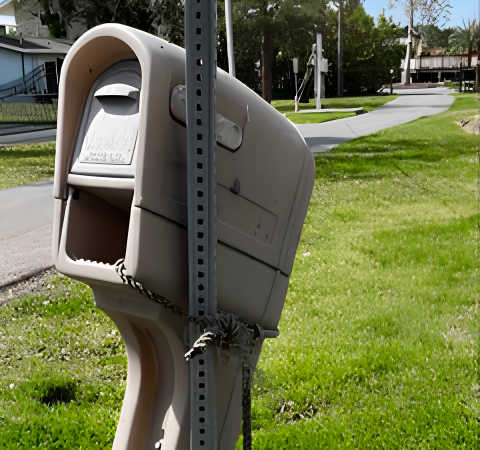
The photo of the mailbox above was taken after the two hurricanes. My neighbor had propped up his mailbox last summer when it came loose from the ground. He used a rope to tie it to the skinny pole so it could stand up straight and the mail carrier would be satisfied.
When I drove past the mailbox yesterday, I realized it had survived two record breaking hurricanes. Although it appears to be “barely holding on,” the rope and the support of a pole suggests stability and resilience. As I continued through my neighborhood passing abandoned homes and new construction, I thought about the people who are living with dementia and how often family members and friends tell me they feel they are “barely hanging on,” as if it were a confession. So who or what supports you emotionally when you feel overwhelmed?”
The unpredictability of a dementia diagnosis could feel like a powerful force of nature, as both causes disruption, uncertainty, pain, and distress from an unplanned life changing event. Developing social and emotional supports to help maintain well-being and a sense of connectedness is key to finding our inner strengths that can get us through difficult times.
Finding emotional support when you feel you are at your wits end does not just include surrounding yourself around family and friends. But much like the slack in the rope that allowed the mailbox to endure the ebb and flow of the strain of the wind and the water during two horrific hurricanes, emotional flexibility, or the ability to adapt to different challenges and emotions, allows us to respond effectively to life challenges. Emotional flexibility gives us the ability to understand the situation and be more comfortable and less overwhelmed.
Rather than feeling the despair of trying to “hold on,” emotional flexibility is about holding onto everything at once. Allowing yourself to feel happiness and hope at the same time, even when you feel anger or fear. These shifts of emotions, during the same day or even within an hour can be embraced. All emotions fosters resilience and helps you practice emotional flexibility.
Give yourself permission to be happy even when you are sad and learning to live in the moment by being fully present with your emotions takes practice. Developing emotional flexibility will become easier and it will be well worth your effort. Making time to engage in activities you enjoy and developing healthy eating and sleeping habits, as well as incorporating a regular physical activity into your day are some of the best supports you can build into your life.
Taking breaks throughout the day and scheduling respite opportunities to recharge emotionally and physically will help you feel renewed. Yoga, and practicing mindfulness and relaxation techniques helps with managing stress. Communicating your needs and asking for help can boost your self-esteem and confidence.
Perhaps the next you feel you can’t hang on any longer, give yourself some slack, like the rope on the mailbox, and go with the ebb and flow of your emotions throughout the day. Finding the proper supports will allow you to “weather the storm” and not give in to deep despair.
“Life isn’t about waiting for the storm to pass…it’s about learning to dance in the rain.” Vivian Green
If you would like more information about our Memory Ministry, our Memory Cafe or Family and Friends Workshops, please contact Vicky at vpitner@firstumc.org.